
Ground Opened Precisely for Foundations and Utilities
Excavation in Danbury for foundations, trenches, and site cuts on residential and commercial lots
Excavation work on a building site starts with locating utilities, confirming the dig dimensions from the plan, and choosing the right equipment for the depth and material being moved. Land Pro NC provides excavation in Danbury, run by a locally owned crew whose owner operates the machines himself on residential and commercial jobs. Old farm ground being converted to building lots in the Stokes and Mayodan area often hides buried debris, old fence lines, and soft fill pockets that a plan can’t account for, so the operator’s ability to read the ground as the dig progresses is as important as the plan itself.
Trenching for footings and utilities, basement cuts, and pond and retention excavation all fall within the scope. Pricing reflects the depth of the dig, the material encountered, and site access conditions. Rock or buried material found during excavation affects both the method and the cost, and that possibility is worth discussing before the job starts so the budget accounts for it.
Bring your building plan and site address to Land Pro NC to get the excavation scope reviewed before digging begins.
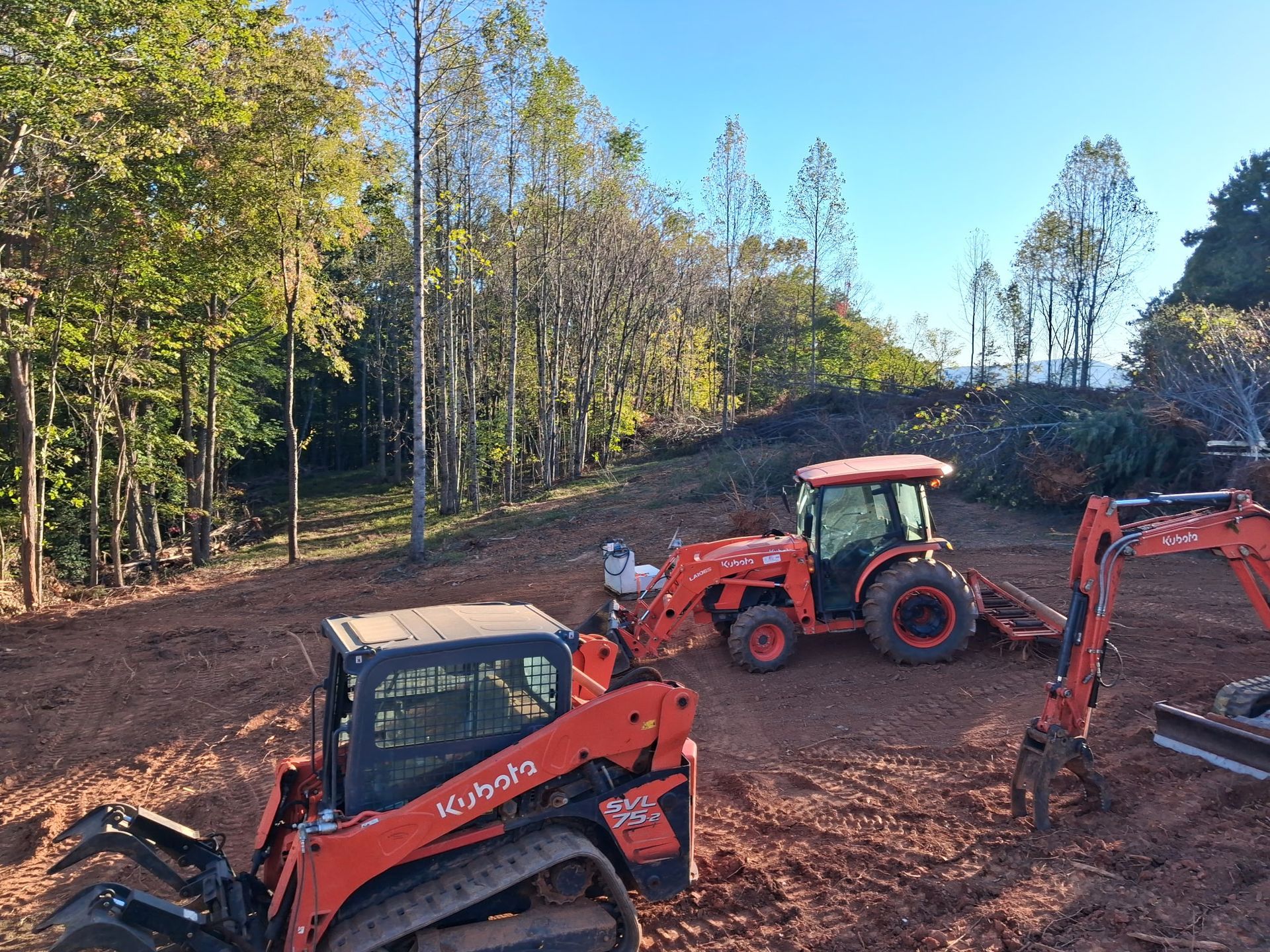
What Proper Excavation Requires on Rural Building Lots
A correct excavation holds the dimensions and depth called for in the plan, with walls cut square and the bearing surface at the bottom left undisturbed rather than loosened by equipment that went too deep. Soft spots or buried material found at bearing depth have to be addressed—either cut out and replaced with compacted fill or flagged for the foundation engineer—before footings are set.
After excavation is complete, the cut holds its shape and the bottom sits at the planned elevation, ready for the foundation crew to set forms. Walls that cave before forms are set, or a bearing surface that wasn’t cut cleanly, force the foundation crew to stop and correct the dig—which adds cost and may affect the foundation design.
For trench work, soil type and trench depth determine whether shoring is needed under applicable safety standards; this is not something that should be assumed away on a deep trench in sandy or loose material. Confirm before work begins what subsurface conditions your site is likely to present and whether the plan accounts for them.
What to Know Before Excavation Work Begins
Excavation on lots in Stokes County—particularly on older parcels being prepared for their first permanent structure—sometimes reveals subsurface conditions that affect how the dig is scoped and completed.
What is checked before excavation begins on a new lot?
Utility locations are confirmed before any ground is opened; digging without that step risks hitting buried lines that don’t appear on older property records, which is common on long-held farm parcels.
How does buried material or debris affect the excavation scope?
Buried debris—fence posts, old foundations, fill from past grading—has to be removed when it falls within the dig area; the time and cost to deal with it depend on volume and how deep it is encountered.
What determines which excavation method is used on a given job?
Depth, soil type, and cut dimensions determine which equipment is used; a wide shallow cut calls for different tools than a deep narrow trench, and the bearing material at the bottom determines whether the cut depth is correct.
Why does the bearing surface at the bottom of the cut matter?
The bearing surface is where the footing or foundation sits; over-excavating loosens the soil below the planned bearing depth and reduces its load capacity, which has to be corrected before concrete is placed.
What should you know about subsurface conditions when planning an excavation?
Variable subsurface material—rock, buried fill, or soft layers—isn’t always detectable from the surface; a contingency in the project scope and budget for unexpected conditions is standard on lots with unknown subsurface history.
Land Pro NC also handles excavation in Stokes, King, Walnut Cove, Mayodan, and Winston-Salem. Call Land Pro NC with your plan and timeline to get the excavation scope confirmed before other trades schedule around it.