
Brush and Timber Cleared Without Hauling It Away
Forestry mulching in Danbury for overgrown fields, wooded lots, and rural acreage where cutting and grinding in a single pass opens the land
Overgrown fields and rural acreage covered in briar, sumac, and young timber can’t be farmed, grazed, or built on until the standing growth is removed—and hauling off that volume of debris adds cost and time to a job that could be handled in one pass with the right equipment. Land Pro NC provides forestry mulching in Danbury, running the mulching head through overgrown areas to cut and grind standing brush and small trees in a single pass, leaving chips on the ground rather than debris to be hauled. Much of the land in the Walnut Cove and Mayodan area is old farm ground that has grown up over years of disuse, and forestry mulching is a practical way to reclaim it without the logistics of burning or hauling.
The mulching head cuts and grinds standing growth in one pass, leaving a layer of wood chips that breaks down over time and can suppress secondary regrowth on pasture land. Larger trees are handled first where needed before the mulching head is run through the area. The chips left on the ground don’t require hauling, which is why mulching is often faster and less costly than clearing with haul-off on acreage that will be replanted or grazed rather than built on.
Talk through your acreage and intended land use with the Land Pro NC crew to confirm whether forestry mulching fits your project or whether clearing with haul-off is the right approach.
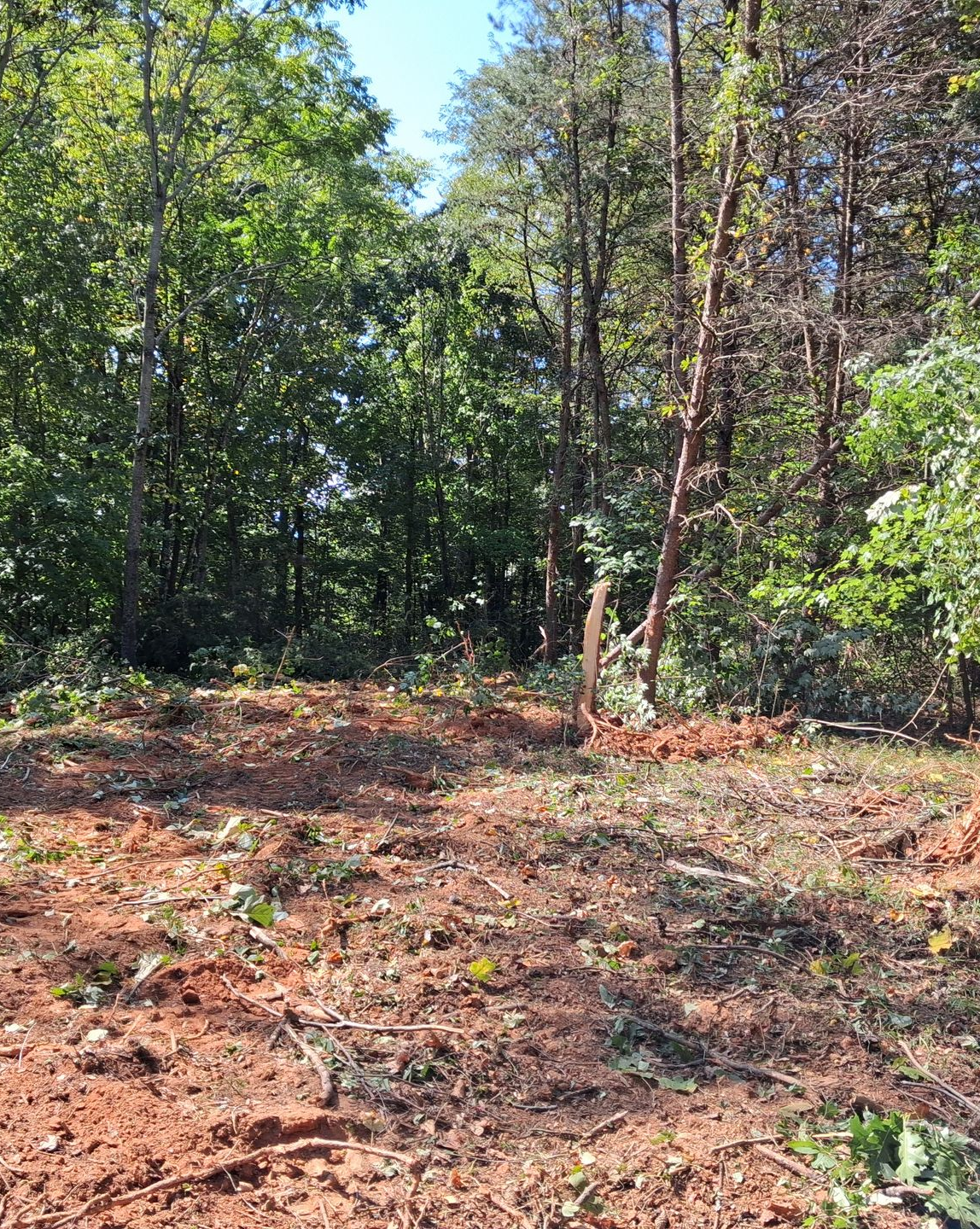
How Forestry Mulching Handles Growth That Hauling Won’t
Forestry mulching is most effective on overgrown pasture, fields being reclaimed, and buffer strips where opening the canopy and controlling regrowth matters more than producing a clean bare surface. The mulching head processes standing material at ground level, so stumps are ground in the same pass rather than pulled and hauled separately.
After a mulching pass, the land surface is open, with a layer of wood chips where the brush and small trees stood. The chip layer breaks down within a season or two on land that is grazed or mowed; on lots being prepared for grading and construction, confirm whether the chips need to be removed before earthwork begins, since organic material left in a fill zone creates settling problems over time.
Stump removal and debris hauling are sometimes needed beyond what a mulching pass covers, particularly for large-diameter stumps or where a clean bare surface is required for the next phase of work. Confirm with the crew what the mulching pass includes and what handling, if any, requires a separate scope.
What to Know Before Scheduling Forestry Mulching
Forestry mulching on rural acreage in the Danbury area is often the first step in returning overgrown pasture or old farm ground to productive use, but the approach has to fit the intended land use that follows.
When is forestry mulching a better choice than conventional clearing?
Mulching works well when the goal is to open the land and suppress regrowth without hauling material off-site; conventional clearing with haul-off is needed when the surface will be graded for building, since chip material left in fill zones creates settling problems as it decomposes.
How are large-diameter trees handled during a mulching pass?
Trees beyond the capacity of the mulching head are typically felled and dealt with separately—bucked into sections and removed or processed with a different attachment—before the mulching head works through the remaining brush and smaller trees.
What does the land look like after a forestry mulching pass?
The surface is open with a layer of wood chips where the brush and small trees were; chip depth depends on growth density, and the material breaks down over time with soil activity and normal weathering.
Why doesn’t mulching work well on land that will be graded and built on?
Wood chips in a fill zone are organic material; as they decompose, they lose volume and cause the soil above to settle unevenly, which is why clearing with full stump removal and debris haul-off is the correct approach before any earthwork begins.
What should you confirm with the crew before mulching starts?
Whether large-diameter stumps require separate handling, whether any hauling is included in the quote, and whether the chip layer needs to be addressed before the next phase of work—all of these should be settled before the machine is on-site.
Land Pro NC also handles forestry mulching in Mayodan, Stokes, King, Walnut Cove, and Winston-Salem. Call Land Pro NC to walk the acreage and confirm whether mulching fits your land use plan before scheduling the work.